Kept & Counted

Learn to see it · the mechanics, one at a time

Cohering, diverging, mixed.

You have the two ingredients now: the coil, which is the price shape, and the cap, which is who is behind it. This page is the moment they meet. Every coil on the read gets exactly one of three words, and the word is just this: do the shape and the volume tell the same story, or not?

The idea

A verdict is a sentence with two clauses.

Whenever the read judges a name, it is really saying one sentence with two halves. The shape says this, and the commitment says that. The coil is the first clause: a tight pause pressed to the high. The caps are the second clause: green buying, red selling, or nothing decisive.

The three verdict words do not describe the price or the volume on their own. They describe whether the two clauses agree. That is the whole trick. Once you hear the verdict as a sentence instead of a label, it stops being jargon and starts being a claim you can check.

Cohering

THE SHAPE SAYS

Coil, pressed to the high.

THE CAPS SAY

Accumulation. Green buying.

They agree. A real pause, being bought. Goes to the pick list.

Diverging

THE SHAPE SAYS

Coil, pressed to the high.

THE CAPS SAY

Distribution. Red selling.

They conflict. A pause hiding an exit. Goes to the fakes, equal billing.

Mixed

THE SHAPE SAYS

Coil, pressed to the high.

THE CAPS SAY

Nothing decisive yet.

They do not confirm each other. We wait, and we say so.

The green one

Cohering: everything is saying the same thing.

Cohering is agreement, and it is stricter than just green caps. Three things have to line up at once: the caps read accumulation, the price is riding above a rising 40-week average (the trend is genuinely up, not just bouncing), and the box is either tightening or already mature (a real, settled pause, not a two-week fluke). When structure, trend, and commitment all point the same way, the machine calls it cohering and the name earns a place on the pick list.

Take IIPR from that Saturday read. A tight coil glued to its high, and underneath it a clean stack of green: 5G / 0R, five green caps to zero red. The pause is real and it is being bought into. Nothing is arguing with anything.
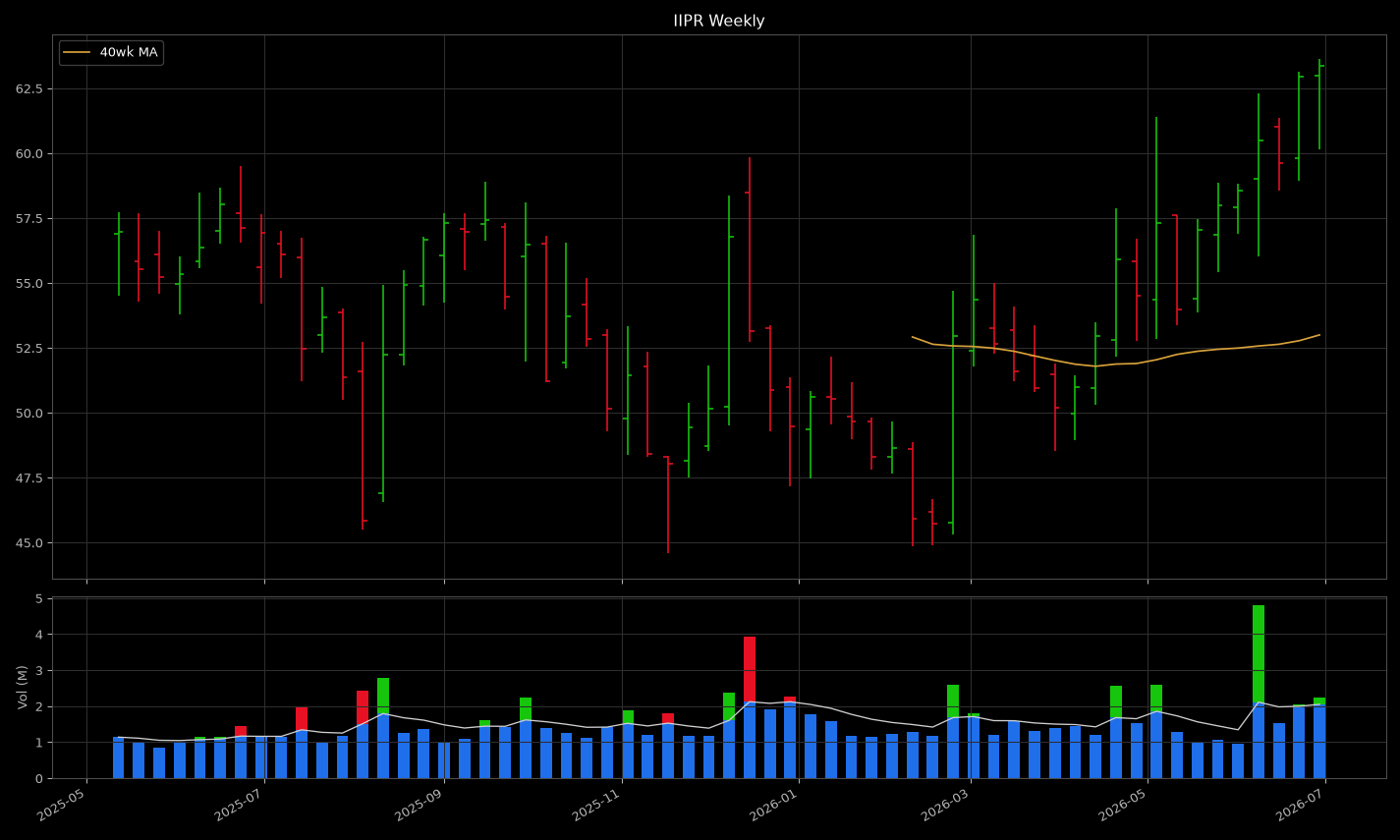
IIPR weekly: a tight coil at the high with a run of green volume caps and no red
IIPR, weekly. Coil at the high, green caps underneath, price above a rising 40-week line. Shape, trend, and commitment all agree. That agreement is what cohering means.

The dangerous one

Diverging: the shape lies and the volume tells the truth.

Diverging is a conflict, and it is the single most dangerous chart on the board, because on price it looks exactly like cohering. Same tight coil, same press to the high. If you only read price, you buy it. But the caps underneath read distribution: big money is leaving while the price hovers and looks calm. Structure says pause, commitment says exit. The two clauses contradict each other.

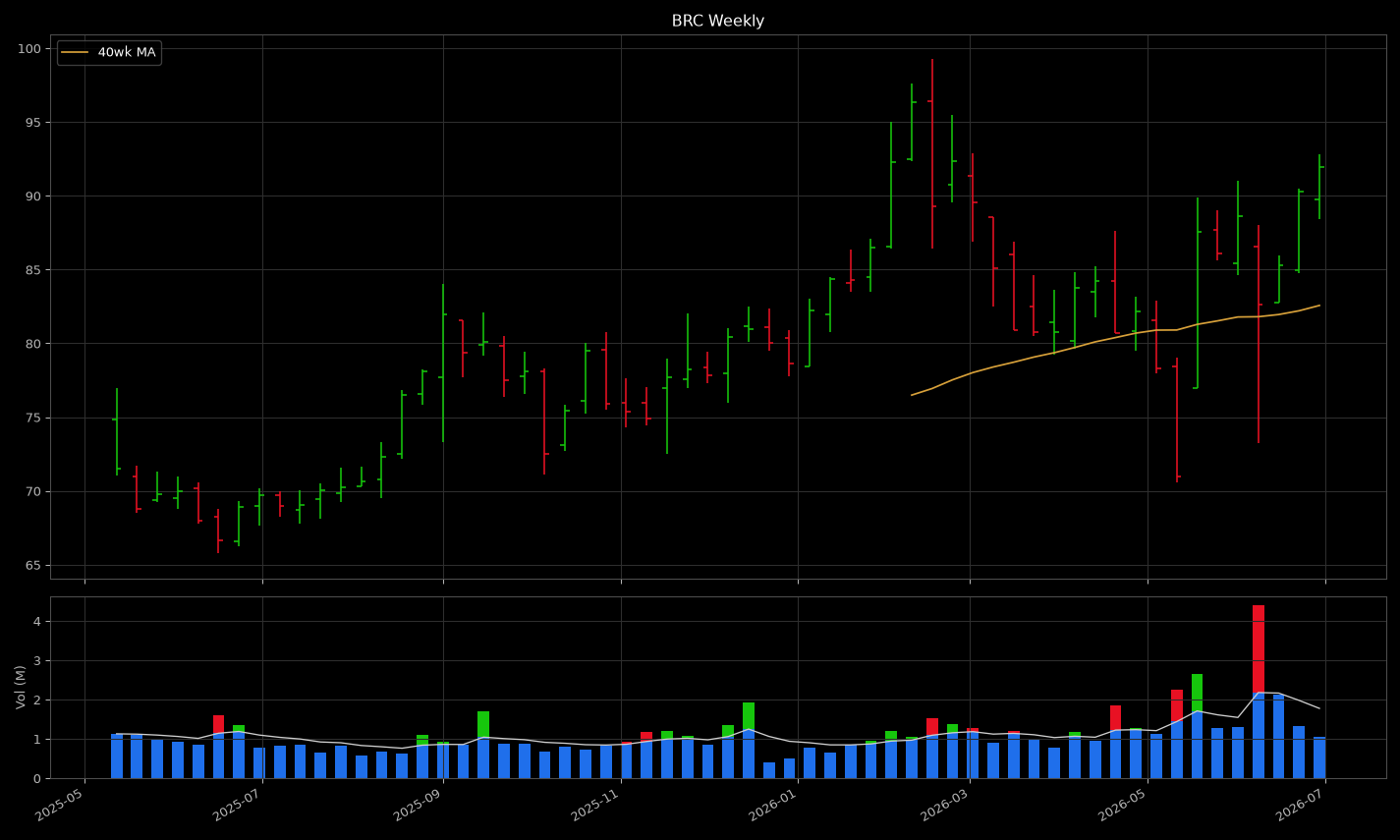
Here is BRC from the same read: a coil sitting near its high, but the caps come back 2G / 3R, with the red carrying the weight. Supply is walking out the back door while the front window still looks tidy.

BRC weekly: a coil near the high but with red volume caps showing distribution
BRC, weekly. On price it could pass for a pick. The red caps are the whole difference: selling into the pause, not buying it.

Why we print the fakes

The diverging chart is the one most likely to take a newcomer's money, precisely because it wears the costume of a winner. So it does not get buried. It goes on the front page next to the picks, with equal billing. Counting the traps out loud, before the outcome, is the entire point of this site.

The honest one

Mixed: the word most people do not have.

Here is where the read parts ways with the guru. When the two clauses do not clearly confirm each other, there is a strong temptation to round up to a call anyway, to sound certain. The machine refuses. It has a third word for exactly this: mixed. Not bullish, not the trap, just not confirming yet.

MAC on that Saturday is a clean example. By raw count the caps look bought: six green weeks to two red, 6G / 2R. A guru quotes the six and calls it. But the machine grades commitment on magnitude too, not just count, and the magnitude did not clear the bar, so the commitment came back neutral. Shape said coil, caps said "not sure," and the honest verdict is mixed. We would rather tell you the components disagree than manufacture a confidence that is not there.

This is the same spine as the gate that sometimes refuses to hand you any picks at all. A read that is willing to say "not yet" is the only kind whose "yes" is worth anything.

Now check the read's homework

Every word on the read is a claim you can test.

Open today's read. Every coil carries one of these three words, and now it is not a label the machine is asking you to trust. It is a claim about agreement you can check yourself, in three moves:

One: is the shape a real coil at the high? Two: are the caps green, red, or nothing decisive? Three: do those two answers agree? Green and agreeing is cohering. Conflicting is diverging. Neither clearly winning is mixed. Then compare your verdict to the machine's and see if you landed in the same place.

When you do, you have the whole engine in your own eyes. The coil, the caps, and the one question that joins them. That is the read, and now you can read it without us.

The exact thresholds behind each verdict, including the rising-average and box-maturity conditions, are printed in full on the how we count page.